




 James Byron Dean has become one of the most famous and iconic figures in American cinema, despite his short career and tragic death.
James grew up in a small family: his father was a dental technician and his mother was a housewife. When Dean was 9 years old, his mother died of cancer and he went to live with his aunt and uncle on a farm in Fairmont, Indiana. After graduating from high school, he attended the University of California at Los Angeles (UCLA), where he studied theater arts, but soon dropped out to devote himself full-time to his acting career.
James Dean’s career began with small roles on television and in the theater. He gained recognition after starring in commercials and episodic roles in television series. His breakthrough came in East of Eden (1955), in which he played the lead role of Cal Trask. This film brought him widespread fame and an Oscar nomination.
In 1955, James Dean starred in the film Rebel Without a Cause, which became a cult classic and cemented his status as a star. His role as Jim Stark made him an icon of youth culture at the time. Dean’s next and final completed film was Giant (1956), for which he received his second posthumous Oscar nomination.
On September 30, 1955, James Dean died in a car accident on a California highway when his Porsche 550 Spyder collided with another car. He was only 24 years old. Despite such a short life and career, Dean left a significant legacy in cinema and culture, becoming a symbol of rebellion and youth.
James Dean posthumously became an icon of popular culture, a symbol of defiance and youthful energy. His style, demeanor and choice of roles had a huge influence on subsequent generations of actors and audiences. In 1999, the American Film Institute included him in its list of the greatest actors of all time. Link to biography.
Date of Birth: February 8, 1931
Age: 24 years
Date of death: September 30, 1955
Career: Actors
Sun: x Aquarius 18°
Moon: k Scorpio 05°
Ascendant: a Aries 12°
James Dean - (Natal Chart)
Date of Birth: February 8, 1931 at 9:00 (GMT -6)
Place of Birth: Marion, USA
Coordinates: Latitude 40°n34', Longitude 85°w40'
House system: Placidus
| Planet | Longitude | House position | |
| Q Sun | x Aquarius 18°53'48" | 11 | |
| W Moon | k Scorpio 05°43'52" | 7 | |
| E Mercury | z Capricorn 26°01'29" | 10 | |
Show more | |||
| Planet | Strength | Harmony |
|---|---|---|
| Q Sun | 36.09 | 0.15 |
| W Moon | 62.52 | 17.95 |
Show more | ||
| House | Strength | Harmony | Longitude |
|---|---|---|---|
| House 1 | 124.61 | -41.80 | a Aries 12°13'43" |
| House 2 | 16.33 | 4.30 | s Taurus 20°10'06" |
Show more | |||
| Planet | Aspect | Planet | Orb |
| Q Sun | o Quincunx | Y Jupiter | 7.29 |
| Q Sun | t Sextile | I Uranus | 6.45 |
| Q Sun | o Quincunx | P Pluto | 0.32 |
Show more | |||
| Figure | Planet | ||
| Bisextile | W Moon - R Venus - O Neptune | ||
| T-Square | U Saturn - { North Node - } South Node | ||
Show more | |||
James Dean - Natal Chart Interpretation
Horoscope interpretation comes down to combining the meanings of the four basic elements of astrology — Planets, Signs, Aspects, and Houses — into a single whole, which is what makes each interpretation individual. More...
SUN
Strength: 36.09
Harmony: 0.15
 The SUN is the most important luminary, the center of life force. It can be compared to the king on a chessboard. It determines the health and well-being of the person born. It gives a creative impulse and ideals, including the desire for power, influence, and strength.
The position of the main luminary in the natal chart has fateful significance. For example, the happiest people on Earth are those who do not have pronounced tense aspects to the Sun. At the same time, one might think that their character traits may be somewhat “soft,” because through the Sun a person develops the ego and strengthens the inner backbone of life. It is important to remember that the Sun represents the inner mind, not instinct. More...
The SUN is the most important luminary, the center of life force. It can be compared to the king on a chessboard. It determines the health and well-being of the person born. It gives a creative impulse and ideals, including the desire for power, influence, and strength.
The position of the main luminary in the natal chart has fateful significance. For example, the happiest people on Earth are those who do not have pronounced tense aspects to the Sun. At the same time, one might think that their character traits may be somewhat “soft,” because through the Sun a person develops the ego and strengthens the inner backbone of life. It is important to remember that the Sun represents the inner mind, not instinct. More...
Q Sun in Aquarius x 18°
A representative of Aquarius can surprise acquaintances like no one else with their extravagance and wild antics. This person is freedom-loving and curious, which prevents them from staying in one place for long. The description of Aquarius shows that they can be almost obsessively friendly, yet they do not always have enough tact, which becomes an obstacle in communication with others. An Aquarius Sun always strives for new adventures without focusing on any one thing. Of all the signs, Aquarius can be described as the most unpredictable.
Read more...
Q Sun in the 11th House
ELEVENTH HOUSE (House of hopes, wishes, and friends). SUN (planet of vital energy and individuality) in the Eleventh House: the native is successful in society and knows how to win and keep friends. They benefit from their friends’ faith and support. They have great goals in life, and their optimism attracts allies. Strengths: idealism and creativity. Weakness: excessive dominance.
Read more...
Sun Aspects
Just as all the planets in the solar system revolve around the Sun, a person receives their life purpose from the Sun in the natal chart. The Sun is the ego, the “inner child” that makes the final decisions. It guides the person and can be considered the “boss” of the natal chart, especially in the charts of men. Read more

ASCENDANT
Strength: 53.95
Harmony: -17.62
 In the birth chart, the Ascendant is the cusp of the First House. It is the second most important factor after the position of the Sun. The position of the Ascendant in the signs of the Zodiac determines how a person manifests outwardly. The position of a planet on the Ascendant significantly strengthens the expression of that planet’s qualities in the person. In general, the position of planets on or near the Ascendant is the third most important factor. The symbol used in the table is (ASC).
The Ascendant speaks of the mask a person wears in public; it is the first impression they make when meeting people. Often, when the person is puzzled by how others describe them, it is because others are describing this aspect of their personality. The Ascendant is present in the person’s appearance and individuality, sometimes extending as far as influencing physical characteristics. The sign becomes noticeably expressed in their image, style, and manner of carrying themselves. It is also reflected in the way they act. Some astrologers believe that the sign becomes weaker after a person reaches the age of 30, as their confidence in who they are grows. The rising sign manifests in the first personal traits inherent in the person and in the way they react to their environment.
ASCENDANT in Aries a 12° - Ruler: Mars and Pluto
Mars, the ruler of the sign Aries, gives this zodiac sign militancy, fire, and assertiveness, since Mars is the planet of war and fire. A typical Aries knows how to stand up for their rights and is decisive and self-confident. Aries also has an unpleasant character trait — selfishness. This is because Aries comes first in the zodiac circle and symbolically represents a newborn child, and small children think only of themselves. Mars is the planet of instincts, and people born under this sign tend to live by impulse.
People born with Aries Rising tend to be energetic, proactive, hasty, conflict-prone, selfish, impulsive, quick-tempered, aggressive, assertive, stubborn, independent, and alert. They may also have mechanical ability, be physically active, and show egocentric tendencies in a negative sense. A general dislike of restraint and any kind of limitation, along with an unwillingness to follow someone else’s instructions, may be typical for them. They need to learn diplomacy and tact, as well as how to plan their affairs and projects in advance. By directing their energy toward more constructive goals, they will get better results. Like the ram that symbolizes this sign, they usually charge headfirst into problems, hoping that if they apply enough force, they will eventually solve everything and break through every obstacle in front of them, even when those obstacles are people. They enjoy life’s tests and challenges, since they are very competitive by nature and at times may be overly combative. Routine quickly bores them, so they need to learn perseverance, as they are inclined to jump from one thing to another, always looking for something new. They should finish what they start before moving on.
To make constructive use of the beneficial influence of the ruling planet, Aries needs to train inner strength, decisiveness, and confidence.
The senior ruler Mars and the junior ruler Pluto rule Aries, so their influence is very important in the natal chart. Read more...
Ascendant Aspects:
MIDHEAVEN (MC)
Strength: 70.83
Harmony: 7.37

The Midheaven (Meridian, MC) is the culminating point of the natal chart. It symbolizes the noon of life and coincides with the cusp of the Tenth House of the horoscope. The Meridian line, MC - IC, is the vertical axis of the horoscope, while the Ascendant - Descendant line (AC - DC) is the horizontal axis. Together, they form the so-called “axial cross,” or “cross of fate.” In terms of importance, the Midheaven ranks third in the horoscope after the Ascendant and the position of the Sun. The Midheaven, like the Tenth House of the horoscope as a whole, symbolizes everything connected with the person’s profession and social standing: success or lack of success in society, career, popularity, fame, titles, awards, or the absence of these. It shows the person as an individual within society, points to their professional skills, and indicates the possibility of rising up the social ladder.
Midheaven in Capricorn z 06° - Ruler: Saturn and Uranus
Rulers: Saturn and Uranus. A person with the MC in Capricorn has pronounced ambition, a desire to have weight and significance in society, and a wish to hold as high a position as possible. Material security, which gives them self-confidence, is also far from unimportant. Deep down, they dream of autonomy and independence, and for this they can wait a long time for their moment and endure a great deal.
This is the classic image of the careerist, yet no one has such a strong sense of duty and responsibility as Capricorn. Perhaps only Virgo can compare, but Virgo finds it harder to reach the heights because of constant worry, fussiness, panic, and fixation on details that sometimes prevent them from seeing the bigger picture.
Capricorn, however, is not prone to panic; on the contrary, difficulties only mobilize them. Still, they reach the heights rather slowly, but Capricorn never lacks patience and endurance. Once they set a goal, they do not retreat from it and sooner or later — usually later — they achieve it, typically in the second half of life or in its final third. Capricorns, that is, people with a strongly expressed Capricorn sign, most often hold leadership positions and are valued as high-class specialists. Read more...
Midheaven Aspects:
MOON
Strength: 62.52
Harmony: 17.95
 The Moon is a transmitter of sensations, emotions, and moods. It rules the spheres of the soul and subconscious, innate reflexes, and habits that come from childhood. The Moon is the ruler of Cancer. Taurus is considered the sign of its exaltation. Capricorn is considered the sign of its fall, and Scorpio the sign of its detriment, or exile. If the Moon has strong essential dignity in the horoscope and forms harmonious interactions with other planets in the natal chart, the native feels inner harmony; even when difficulties arise in life, they overcome periods of trouble with ease.
More...
The Moon is a transmitter of sensations, emotions, and moods. It rules the spheres of the soul and subconscious, innate reflexes, and habits that come from childhood. The Moon is the ruler of Cancer. Taurus is considered the sign of its exaltation. Capricorn is considered the sign of its fall, and Scorpio the sign of its detriment, or exile. If the Moon has strong essential dignity in the horoscope and forms harmonious interactions with other planets in the natal chart, the native feels inner harmony; even when difficulties arise in life, they overcome periods of trouble with ease.
More...W Moon in Scorpio k 05°
The Moon: the second most important luminary, and often the first in a woman’s chart. The Moon gathers and transforms the energy of the other planets, especially the Sun. It rules instincts and emotions. It is the planet of moods. It symbolizes the feminine principle as conception and motherhood, unlike Venus, which symbolizes sensual love.
 People born with the Moon in Scorpio are usually secretive and inclined to reflect quietly on problems, whether those problems appeared in real life or only in the world of their imagination. Their mental and emotional activity may be directed toward feelings, sex, or death.
Read more...
W Moon in the 7th House
SEVENTH HOUSE - House of marriage and partnership. MOON (planet of emotions and instincts) in the Seventh House: security is important to the native in marriage and in relationships with people. They may see a parental image in their spouse. Their husband or wife will care for and protect them. At some stage of life, they are likely to gain popularity. Strengths: sensitivity in partnership and sensuality in marriage. Weaknesses: inconsistency in love; divorce is possible.
Read more...
Moon Aspects
Moon aspects determine a person's everyday lifestyle and influence their health and relationships with others. They govern the maternal nature of women and the feelings of men connected with the opposite sex. Read more...
MERCURY
Strength: 53.49
Harmony: -29.54
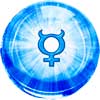 Its close proximity to the Sun defines the nature of this small yet charismatic planet. Its main functions are intellect, logical thinking, cognition, communication, and the individual’s connection with society.
The ability to establish connections is traditionally considered Mercury’s most specific “character” trait. Even the myths described Mercury, or Hermes, as a mediator between Olympus and Earth, the messenger of the gods who connected their world with the world of humans by transmitting information: the gods’ commands to people and people’s requests to the gods. More...
E Mercury in Capricorn z 26°
People born with Mercury in the sign of Capricorn are endowed with clarity of mind, discipline, seriousness, practicality, organization, objectivity, and sobriety of thought. They are not impressed by inflated promises.
Read more...
E Mercury in the 10th House
TENTH HOUSE (House of career). MERCURY (planet of the mind) in the Tenth House: the native knows how to use facts to their advantage and adapt to different people. Their profession needs to be intellectually stimulating, and they have the makings of a writer or reporter. Their career is connected with frequent travel. Strength: successful interaction with people in positions of power. Weakness: an unexpected collapse or uncertainty in the career.
Read more...
VENUS
Strength: 32.66
Harmony: 8.59
 The areas of Venus’s influence are beauty, love, art, choice, friendship, partnership, and material values.
Venus rules the Second and Seventh Houses. The Second House points to money and property; it describes not only the material values a person owns, but also their natural talents and abilities, through which, with certain effort, they can acquire material prosperity. The Seventh House governs marriage, partnerships in business and politics, and business contracts. A strong Venus is a source of emotional warmth, tenderness, selfless devotion, and material well-being. More...
R Venus in Capricorn z 02°
People born with Venus in Capricorn express love and affection thoughtfully, carefully, and with complete seriousness. They do not display these feelings openly. They are deeply concerned with what others will think of them.
Read more...
R Venus in the 9th House
NINTH HOUSE (House of exploration and education). VENUS (planet of love and pleasure) in the Ninth House: the native treats people from different backgrounds with warmth and understanding. They are receptive to new ideas and experiences. They have a chance to earn recognition or an award. They may marry abroad or marry a foreigner. Strength: high ideals. Weakness: they strive for the unattainable.
Read more...
Venus Aspects:
MARS
Strength: 33.36
Harmony: -20.84
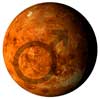 Mars is strength, assertiveness, aggressive sexuality, struggle, and rivalry. The planet’s most important functions are protection, the instinct of self-preservation, and self-expression. In the modern world, people rarely have to protect their lives or homes from mortal danger. What comes to the forefront instead is defending one’s own opinion, protecting personal interests in professional and social spheres, competing, and striving to win.
A strong Mars gives the world heroes capable of sacrificing themselves for other people or for higher ideals. In everyday reality, the person expresses themselves vividly through activity directed toward the common good. More...
T Mars in Leo g 02°
People with Mars in Leo in the natal chart take pride in themselves and probably have a strong ego. They want to stand out, distinguish themselves favorably, and be recognized for who they are.
Read more...
T Mars in the 5th House
FIFTH HOUSE (House of creation and sex). MARS (planet of energy and self-assertion) in the Fifth House: the native is hasty and impulsive in love affairs, and sometimes too impatient in sex. They have a competitive spirit in love, sports, and social life, and they need victories. Their charm attracts people to them. Strength: leadership potential. Weakness: conflicts with loved ones because of great pride.
Read more...
Mars Aspects:
JUPITER
Strength: 71.71
Harmony: 2.22
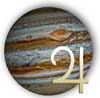 In the astrological theater, Jupiter plays the role of the “Great Benefic.” Since antiquity, it has been associated with luck and material blessings. Yet the largest planet in the solar system has other purposes as well. It is responsible for spiritual and intellectual development and encourages a person to search for the meaning of life. From a psychological point of view, Jupiter embodies the generous, fair father. Its main enemies are stagnation and boredom. The giant rules the Ninth and Twelfth Houses.
The remarkable qualities of a strong Jupiterian person are often not their own achievement, but the result of fantastic luck. A winning lottery ticket or an unexpected inheritance are typical gifts from generous Jupiter. More...
Y Jupiter in Cancer f 11°
A person born with Jupiter in Cancer is loving, peaceful, friendly, sociable, responsive, and perhaps quite patriotic.
Read more...
Y Jupiter in the 4th House
FOURTH HOUSE (House of home, as well as the beginning and end of life). JUPITER (planet of luck and expansiveness) in the Fourth House: the native is happy in their home, feels comfortable there, and is proud of their family. In childhood, they probably felt protected by the love of their parents and inherited material or spiritual values from them. The final stage of their life will pass in comfortable conditions. Strength: they may achieve material success in the city or country where they were born. Weakness: extravagance, excessive generosity toward their household and children.
Read more...
Jupiter Aspects:
SATURN
Strength: 69.32
Harmony: -48.77
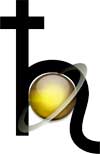 Traditionally, the “Lord of Time” is associated with the darkest sides of life: old age and death, decline and deprivation. Yet Saturn is also a great sage, mentor, and lawgiver. It embodies a person’s conscience. Saturn creates prohibitions, but without them, chaos and anarchy would reign in life. Saturn promotes maturity and teaches a person to plan their life. It rules the Tenth astrological House and is responsible for career, social status, and reputation.
A strong, beneficial Saturn gives a person healthy ambition, the ability to creatively rework experience accumulated over centuries and make valuable discoveries based on it, as well as strong health, longevity, and a secure old age. More...
U Saturn in Capricorn z 18°
Saturn in Capricorn in the natal chart gives people ambition and the capacity for self-control and organization. They are disciplined, patient, and hardworking, and they receive well-deserved rewards for their efforts.
Read more...
U Saturn in the 10th House
TENTH HOUSE (House of career). SATURN (planet of discipline and limitations) in the Tenth House: the native is independent and ambitious and can achieve success. With endurance and persistence, they move toward their goal step by step. By the end of life, they may reach a high position, though they may also face loneliness. Strength: self-discipline and a sense of responsibility. Weaknesses: selfishness; they may lose the trust and respect of others.
Read more...
Saturn Aspects:
URANUS
Strength: 53.97
Harmony: -13.76
 Uranus is a symbol of suddenness and surprise, originality and eccentricity, unforeseen actions and behavior, various shifts and changes, turning points and rearrangements of both a positive and negative nature. Under its influence, past and present values are reassessed, and the future is anticipated.
Uranus is the sign of higher reason and almost supernatural intuition. It gives rise to true geniuses, people who are ahead of their time and remain misunderstood by their own generation. Uranus represents a projected point of the unconscious, yet it brings highly symbolic images and impulses into a person’s consciousness, arising both while awake and in dreams. This distinctive power to form images gives birth to intuition and inspiration, a flash of creative force, as well as scientists and inventors, poets and performers, musicians and artists, statesmen and political figures, religious reformers and revolutionaries.
Driven by the desire to play by its own rules, Uranus embodies change, reform, evolution, and revolution. More...
I Uranus in the 1st House
FIRST HOUSE (House of personality). URANUS (planet of change and originality) in the First House: the native has an inventive mind and possibly unusual interests and hobbies. Their life is marked by sudden, unexpected turns. They are sensitive and independent in their views. They may persistently pursue what they want, showing strong willpower. Strengths: originality, creative mind, initiative. Weaknesses: tactlessness, stubbornness, eccentricity.
Read more...
Uranus Aspects:
NEPTUNE
Strength: 33.65
Harmony: 8.61
 Neptune is full of mysteries. Its realm is feelings and impressions, dreams and reveries. The planet forms a refined perception of art, as well as an attraction to religion and mysticism. Neptune constantly acts on a person in an almost imperceptible, even mysterious way, creating forces that reject and refuse to acknowledge any psychic or spiritual limitations. These forces stir the feelings to their deepest depths and direct the mind toward the search for still-unknown and undiscovered mysteries of nature, the cosmos, and the human being.
More...
Neptune is full of mysteries. Its realm is feelings and impressions, dreams and reveries. The planet forms a refined perception of art, as well as an attraction to religion and mysticism. Neptune constantly acts on a person in an almost imperceptible, even mysterious way, creating forces that reject and refuse to acknowledge any psychic or spiritual limitations. These forces stir the feelings to their deepest depths and direct the mind toward the search for still-unknown and undiscovered mysteries of nature, the cosmos, and the human being.
More...
O Neptune in the 6th House
SIXTH HOUSE (House of service and health). NEPTUNE (planet of spirituality and illusions) in the Sixth House: the native is idealistic about work and sensitive to their surroundings and coworkers. It may be difficult for them to find their place in life and feel truly happy and fulfilled. They may be troubled by strange illnesses; medications pose a special risk and should be taken only under a doctor’s supervision. Strength: a desire to help those in need. Weakness: laziness and passivity.
Read more...
Neptune Aspects:
PLUTO
Strength: 63.13
Harmony: -31.70
 PLUTO is the main ruler of all collective mysteries, gatherings, rallies, demonstrations, and similar mass events. Together with Uranus, it destroys old, rotten, outdated political world systems, creating new ones separately for each nation and state.
On the one hand, Pluto shows a person as an integral being; on the other, as a particle of the cosmos and of a given society. Pluto symbolizes the final stage of the individuation process, a second birth or rebirth, after which the person becomes more complete. In one case, it may bring the person under its influence brilliant success and career advancement, unexpected wealth or worldwide fame, influence over the masses, the crowd, the public, or an audience, and a social rise as rapid and dazzling as a meteor. In another case, it may bring total losses. More...
P Pluto in the 4th House
FOURTH HOUSE (House of home, as well as the beginning and end of life). PLUTO (planet of transformation) in the Fourth House: the native energetically cares for the family and wants to rule in their home. Their parents probably had a strong influence on them, but it is difficult for them to understand their complex attitude toward what they experienced in childhood. Their final years may pass in isolation; perhaps they will dedicate them to work on an important project. Strength: they treat the family with a sense of responsibility. Weakness: they may have lost a parent or guardian early.
Read more...
Pluto Aspects:
CHIRON
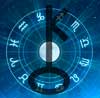 Chiron is a planetoid with the ability to intensify the energetic impulses of celestial bodies. By changing the characteristics of planets, it contributes to unexpected changes in the native’s life, much like Uranus. It should not be forgotten that Chiron symbolizes duality in different areas.
More...
Chiron is a planetoid with the ability to intensify the energetic impulses of celestial bodies. By changing the characteristics of planets, it contributes to unexpected changes in the native’s life, much like Uranus. It should not be forgotten that Chiron symbolizes duality in different areas.
More...
M Chiron in the 1st House
Most importantly, Chiron’s gifts are the talent of duality and adaptability in those spheres and areas of life indicated by the leading principles of that House of the horoscope. This person can skillfully, artfully, and deftly combine opposites. Their cunning, craftiness, and ability to maneuver are boundless.
The action of Chiron in the First House is the strongest. Cunning, craftiness, the ability to flatter, diplomatic abilities, and adaptability are second nature to people with this position of Chiron, while the art of combining opposites is their special talent. These are chameleon-like people, Figaro squared or even cubed. They are capable of being one thing and another at the same time, serving both sides, engaging in several matters at once, and skillfully changing the tactics of a conversation, their state of mind, and even their outward appearance. There are many examples of this in life: a physicist may also be a wonderful poet filled with romance and lyricism; a mathematician may play the violin brilliantly; an astronaut may have the talent of an artist; and a scholar may be an unsurpassed spy.
Read more...
Chiron Aspects:
The Houses provide information about how, where, and to what extent a person's characteristic traits will manifest, how their potential will be revealed, and how all of this will be realized in everyday life. Each House represents a specific sphere of human life. The Houses reflect a person's life in society, the kind of person life compels them to become, and show acquired skills, habits, methods, and goals that life sets before the person, as well as the ways through which they will move toward their goal.
1st HOUSE - a 12°
Strength: 124.61
Harmony: -41.80
1st House in Aries - Ruler of Mars and Pluto
The First House is angular, which means it possesses qualities such as activity, initiative, and dynamism. It is the first of the Houses of life, and in this capacity, it represents the physical aspect of the personality — the body.
The First House in Aries shows fiery drive and dazzling charisma, which are expressed in communication and professional preferences. This is a fighter and a leader, a person who understands from childhood how to win leading positions in the field that interests them. Impulsive and passionate, honest to the point of bluntness, the native cannot stand weakness or passivity in other people, and for this reason may be perceived as rude and defiant, even though they work tirelessly to achieve their goals. The native always presents their strongest side to the world, while hiding a loyal and loving heart.
The senior ruler Mars and the junior ruler Pluto rule Aries, and therefore their influence is especially important when analyzing the First House (Ascendant).
Read more...
2nd HOUSE - s 20°
Strength: 16.33
Harmony: 4.30
2nd House in Taurus - Ruler of Venus
The Second House is the place of a person’s financial power. It shows the source of stable income from which the native can move toward the wealth of the Eighth sector, as well as find connections with their life purpose through the Tenth House, creating prosperity, well-being, and the happiness of public recognition. It is important to understand the ways of interacting with money, the nature of spending, and one’s own behavior in financial matters.
Few people know that the Second sector also shows immunity and vital energy. By strengthening it through methods related to the spheres of Taurus, the native can quickly improve their financial situation and strengthen the body. If Venus is strong in the natal chart, this House placement indicates wealth built through accumulation and investments; if the planet of love is weakened, it points to strict frugality.
Venus rules Taurus, and therefore its influence is especially important when analyzing the Second House.
Read more...
3rd HOUSE - d 15°
Strength: 26.75
Harmony: -14.77
3rd House in Gemini - Ruler of Mercury
The Third House is defined as the House of communication, the sphere in which a person feels the need to express their ideas, whether orally or in writing. As the House that signifies family ties, it primarily includes a person’s brothers and sisters, if they have any, and describes the nature of their relationship with them. In addition, it also points to relationships with other people in the immediate environment, such as neighbors, for example. But this is not all — it also indicates nearby, short-distance travel in the local area: by car, bus, train, or bicycle. The Third House belongs to the cadent Houses and indicates the ability of the native’s mind (Mercury) to learn, perceive different ideas, and adapt to various teachings; in practical terms, this means schooling and primary education.
For the fortunate native under Gemini’s patronage, communication and learning are a pleasure, as natural as breathing. They cannot stand loneliness. They are never bored, because the world is full of so many interesting things. However, at a lower level of development, there is a risk of getting caught up in gossip and intrigue.
Mercury rules Gemini, and therefore its influence is especially important when analyzing the Third House.
Read more...
4th HOUSE - f 06°
Strength: 166.10
Harmony: -20.51
4th House in Cancer - Ruler of Moon
The Fourth House is connected with a person’s private life and the way they would like to arrange their home. This is also where the roots of their origin should be sought. It is the House of motherhood and childcare. It also describes property, housing, real estate, and similar matters. The Fourth House also points to the final years of life and the end of a person’s physical existence. From this perspective, the Eighth House is considered the House of spiritual transformation and liberation, while the Twelfth House is the House in which a person’s restless thoughts and agitated rational mind must be calmed.
The mother and the home she creates are an entire universe for a person with the Fourth House in Cancer. They often miss important events in social life because their heart is in their native home, where loving parents are waiting.
The Moon rules Cancer, and therefore its influence is especially important when analyzing the Fourth House.
Read more...
5th HOUSE - f 28°
Strength: 64.62
Harmony: -11.86
5th House in Cancer - Ruler of Moon
The Fifth House is a House of life that carries the fiery energy of inspiration and the power of motivation. The warmth of this fire extends to others as well. For this reason, this House is considered the House of love that a person gives to others. The love given in connection with this House is not the affection associated with Venus in astrology, nor the sexual instincts related to Mars, but love that comes from the heart — the very quality that is the main characteristic of Leo.
The Fifth House in Cancer creates a loving and selfless parent, but unfortunately, dreams of an ideal family often remain only in the imagination, because the native’s standards are so high and they tend to see partners as heroes from films and books.
The Moon rules Cancer, and therefore its influence is especially important when analyzing the Fifth House.
Read more...
6th HOUSE - g 27°
Strength: 65.06
Harmony: 1.30
6th House in Leo - Ruler of Sun
The Sixth House is traditionally associated with work, health, and service. This House is still focused on the individual, on the “me.” It expresses a person’s attitude toward employment: whether they will do the work voluntarily or whether it will feel like a heavy burden. The Sixth House also indicates a person’s habits, established routine, occupation, general nutrition and, in particular, diet, as well as pets.
The cusp of the Sixth House in Leo forms an inspired and artistic attitude toward work and the body. Routine is hateful to the native, but it should be approached as a game, at the end of which they give themselves a pleasant reward. A person’s energetic uplift can help them recover even from a serious illness, while boredom and disappointment may lead to collapse.
The Sun rules Leo, and therefore its influence is especially important when analyzing the Sixth House.
Read more...
7th HOUSE - j 12°
Strength: 78.85
Harmony: 22.25
7th House in Libra - Ruler of Venus
When describing the properties of the Seventh House as an angular House, it is customary to say that it manifests openly and through the public sphere. Traditionally, it is considered the House of relationships in all areas of life: love, friendship, cooperation, and even enmity. It shows what a person expects from contact with other people and how they express themselves in any union. The Seventh House teaches development through the close social circle, the ability to accept the successes of others, and the ability to learn missing qualities from enemies. The likelihood of marriage and divorce, as well as the personality of the spouse, can also be read through the planets and sign.
Love and marriage are the native’s main triggers, despite the predominance of mental energy and weak sensuality. The exception is Venus and Mars in fire and water signs. People with the Seventh House in Libra are always in love or searching for a suitable partner.
Venus rules Libra, and therefore its influence is especially important when analyzing the Seventh House.
Read more...
8th HOUSE - k 20°
Strength: 24.12
Harmony: -13.14
8th House in Scorpio - Ruler of Pluto and Mars
The key words for the Eighth House are usually considered to be “sex,” “death,” “big money,” and “personal transformation.” It is clear that sex can appear in several forms: as pure passion, as a force aimed at producing offspring, or as an expression of a deep feeling of love. Death also has several meanings and is not reduced only to the death of a specific human being. It can serve as a symbol of a certain idea, thought, undertaking, or even illness that disappears as a result of transformation.
When the Eighth House is in Scorpio, ancestral conflicts, secrets, long-standing enmity, financial flows, rises, and falls are closely intertwined in such a person’s life. They burn down and are reborn in order to continue developing through crises and trials of their faith in the Universal Mind. Wealth and fame come to them only if they unravel the riddles of their Lunar Nodes.
The senior ruler Pluto and the junior ruler Mars rule Scorpio, so both Mars and Pluto will play an important role when analyzing the Eighth House.
Read more...
9th HOUSE - l 15°
Strength: 68.52
Harmony: 9.70
9th House in Sagittarius - Ruler of Jupiter and Neptune
The Ninth House gives life higher meaning, expands the worldview, and encourages the search for keys to knowledge. This is a place of good fortune, considering that its symbolic ruler is Jupiter, the planet of great happiness, as well as connections with a new world. This manifests through higher education, travel to other countries, business contacts with foreigners, the spouse’s relatives, and esoteric knowledge. All of this expands the boundaries of consciousness and opens new paths of development.
When the Ninth House comes under the influence of Sagittarius, this is partly a sign of success, since Jupiter is its natural patron. Knowledge comes to the person on its own; they are an incredibly interesting and versatile individual. The main thing is not to become conceited or present themselves as the foremost expert in the Universe, as this will inevitably lead to degradation.
The senior ruler Jupiter and the junior ruler Neptune rule Sagittarius, so their influence should be taken into account when analyzing the Ninth House.
Read more...
10th HOUSE - z 06°
Strength: 228.31
Harmony: -95.33
10th House in Capricorn - Ruler of Saturn and Uranus
The Tenth House occupies the highest position in the horoscope, emphasizing the culminating nature of the corresponding area and pointing to the highest goal the person should strive to achieve. Therefore, the Tenth House indicates a possible profession, social position and reputation, as well as, in a broader sense, the true needs of the self. The key words for the Tenth House are social realization, recognition, success, fame, and renown.
The calling of a person with the Tenth House in Capricorn is to be a respected and honored member of society. For this, they are ready to spend some time as a subordinate, fulfilling the demands of superiors and strengthening their reputation in order to rise upward later.
The senior ruler Saturn and the junior ruler Uranus rule Capricorn, so their influence should be taken into account when analyzing the Tenth House.
Read more...
11th HOUSE - z 28°
Strength: 70.75
Harmony: -24.24
11th House in Capricorn - Ruler of Saturn and Uranus
The Eleventh House of joy and favorable opportunities, friends, and social activity shows where unexpected luck comes from and how a person can make a profit during a rapidly developing career. However, its main meaning is friendship and participation in collective projects, where the individual shows themselves either as a leader or as an obedient cog in the machine, depending on the nature of the sign on the cusp.
The Eleventh House in Capricorn indicates that for the person, friendship is not an empty word, but a core value on which they build relationships. This is strengthened by the Fifth House in Cancer, where deep sympathy immediately awakens kindred feelings.
The senior ruler Saturn and the junior ruler Uranus rule Capricorn, so their influence should be taken into account when analyzing the Eleventh House.
Read more...
12th HOUSE - x 27°
Strength: 43.99
Harmony: -14.28
12th House in Aquarius - Ruler of Uranus and Saturn
The Twelfth House is the last in the Zodiac. Pisces is the symbolic sign, and Neptune is the symbolic ruler of the Twelfth House. Since Neptune is the planet of delusion and enlightenment, spiritual impulse and the desire to overcome the inertia of the physical world, it can be assumed that the Twelfth House is connected with a certain mystery. Pisces is sensitive and intuitive, inclined toward compassion and self-sacrifice — all of this largely defines the nature of the Twelfth House.
In a psychological sense, this is the native’s subconscious, inner world, largely hidden even from themselves, where all the joys and sorrows experienced since birth are immersed. Whether the native wants to look into their inner self and work with it depends entirely on them and on the decision they make. Some people expect the horoscope to make life easier, while others would like to use it in order to seriously understand themselves. The choice here depends on whether the person wants to consciously explore their inner world or is content for it to remain unknown. It is the Twelfth House that gives the opportunity to find one’s true self, gain faith, and receive inspiration.
People with the Twelfth House in Aquarius may play the role of a shadow leader in large organizations, exerting a certain influence on technical policy and the psychological climate, but they will do this not directly, but through others.
The senior ruler Uranus and the junior ruler Saturn rule Aquarius, and therefore their influence is especially important when analyzing the Twelfth House.
Read more...
Karmic indicators help a person become aware of deep-rooted problems that go back to past lives, and begin working on themselves in order to overcome them and improve both this life and, potentially, the next one. Karmic problems should not be understood as punishment for misdeeds and sins, as karma is usually interpreted in the everyday sense. Karma is not retribution, but rather inertia, when a person attracts similar situations from one life to another. From a karmic point of view, every element of the natal chart can be interpreted without exception. However, the most important indicators of karma in the horoscope are retrograde planets, if any, and the Lunar Nodes.
Retrograde Planets
Retrograde planets are always connected with turning back to the past. The more retrograde planets a person has in the horoscope, the stronger their connection with the past. A retrograde planet also points to an unresolved task from a past life, unfinished business, or unrealized abilities. It forces the person to take up again what could not be completed in the past. The symbol used in the table is R.
Retrograde Mars — Individuality
It is not easy for this individual to coordinate their needs. They have difficulty coordinating thought and action. The past, everything they have truly experienced, remains on the periphery of their consciousness. They also experience sexual difficulties because of the reverse magnetism of the retrograde planet. This is mainly due to their inability to regulate the flow of energy that this planetary position causes them to experience.
Much of what they will experience depends less on thoughts or emotions and more on the ability to manage their energy levels in coordination with the energies they receive from other people. They may react very strongly to a person. Their powerful attachments or dislikes may be based entirely on energies rather than on human sympathies.
Because of this, the individual’s relationships are almost always somewhat distorted. On the sexual level, they apparently symbolize more of a struggle for survival than an actual union with another person. They may jump to conclusions while at the same time delaying the necessary actions that would correct whatever is troubling them. If retrograde Mars is in an air sign, the individual is unusually mentally active and finds it difficult to learn how to relax.
This Mars position is more difficult for women than for men, because the drive system may not correspond to the rest of the horoscope and may diminish femininity. Very few women with this Mars position have, on a subconscious level, a love for men in general. However, on the conscious level, the clear opposite sometimes appears through placing men on a pedestal. This creates a kind of idol worship that brings the woman closer to her subconscious reality by inwardly creating the need to remove the pedestal.
In most positions, retrograde Mars produces a feeling of guilt that isolates the individual, leaving them apart from the free personal relationships characteristic of people with Mars in direct motion.
Retrograde Mars — Karma
When Mars is retrograde in the horoscope, all the individual’s actions in the current life are a restoration of the past. In this life, the individual tries to find people who symbolize those who satisfied them in past incarnations. In their mind, they assign roles to these figures who no longer exist and try, with them, to act out everything they could not previously express. They exert too much influence on people in an attempt to “fit” them into the imaginary roles they have devised for them. They encounter rejection that is too strong and deeply felt, but they do not understand why; they retreat into themselves, never fully experiencing the relationships of their current life in the present moment.
They tend to focus on those times in the past when they dealt with force. Now they subconsciously call forth a vibration toward that same force, whether it is anger, revenge, hostility, or the wrong action of each person in the present. In some cases, they may carry hostility from a past life that makes them distrust the actions of other people. In at least one past life, they experienced suspicious actions or deception from others. The residue of this in the current life weighs heavily on their present behavior.
Retrograde Mars in Leo
Here, the individual may become an island unto themselves. Leo’s pride combines with the force of Mars to create an inner sense of power over other people. The individual rarely acknowledges their influence on others. They may come on too strongly, causing others to back away from them in fear when their weaknesses are pointed out. This occurs during Phase I, which intensifies the reaction. The individual’s opinion of themselves is very subjective and is based more on their current drive than on how other people respond to them. If there is an individual who very much wants to be honest, yet at the same time be an egotist, it is this person.
Sometimes there is difficulty in raising a son; the individual may actually hinder the development of their child by expecting too much from him.
This person does not accept advice. They take a defensive position because they are afraid of losing the illusion of the status they claim, and therefore from time to time they experience great friction with other people. Their goals are so high that when they are fueled by the energy of retrograde Mars, they want to achieve complete fulfillment in everything they see. They must learn how unrealistic these expectations are in their everyday life.
They bring with them into this life a strong desire to command, and therefore continue creating situations of rivalry where, in reality, there is no place for them. Of all Mars positions, this is the one in which the person cannot bear to lose. Clearly, some past-life efforts were not rewarded or fulfilled. Now the individual tries to take back their past by convincing themselves that they possess a considerable degree of power over their life and over those whom they allow to touch it.
Retrograde Mars in the Fifth House
With this position, the individual has difficulty expressing their creativity. On the sexual level, their vibration alternately attracts and repels as they pass through the different retrograde phases. The person is not always in harmony with the natural cosmic forces when they try too hard to be themselves. Sometimes they feel they are fighting the current. However, they themselves try to create such currents so that there is something to swim against.
With this position, love affairs are difficult, and the sexual stimulus does not flow smoothly. At the same time, any childish qualities in the horoscope are intensified. In this life, their energy will one day be directed toward interaction either with a boy who has developmental delays or with a young person who refuses to fit into the expected pattern of behavior. The concept of moving forward represents frustration, since the individual constantly feels that they must be doing something different from what they are doing now. They tend to reflect on delays and failures in their life rather than reach forward toward new horizons.
They are experiencing the karma of reviewing their entire creative process, since much of what they created in the past brought them only dissatisfaction. They must learn what can truly give them a sense of well-being. They will be able to do this best when they overcome the subconscious feeling of superiority that fed their ego but did not give them confidence.
Retrograde Jupiter - Individuality
A native with retrograde Jupiter is a living truth unto themselves. Their ideas about right and wrong, about the morality of the world through which they travel, and about the honesty of other people’s opinions have little influence on what they feel within. In an attempt to be fair, this native develops their own unique set of standards. Usually, these standards are based on personal experiences from the beginning of this life, as well as on experiences from other incarnations, and they reflect not mass consciousness, but rather the native’s personally formed concept of the universe.
The native has a keen feel for different places and for how similar they are to one another. At the same time, they are aware of the different levels at which people think. Always studying the mind, they seek to experience an inner richness that they hope will ultimately equal the opportunities available to them in the outer world. This often creates dissatisfaction, which manifests as inner restlessness. They prefer to deal with things by grasping the essence of an idea and its significance, rather than the details required to bring that idea into reality.
If Jupiter is well-aspected, the native may have strong self-motivation, but they should be careful not to try to do too many things at once.
Essentially, they are free in spirit. And although they will adapt to the ideals of society when those ideals are useful to them, they constantly struggle to preserve their sense of individuality.
A native with this placement may possess great, almost prophetic wisdom. They can summarize the essence of long, complex, detailed projects in just a few words, while others might become lost in countless small details. The native can be conscientious. Their innate honesty with themselves is one of their most important defining traits. When retrograde Jupiter is poorly aspected, it may indicate ill will carried over from past incarnations. In such cases, a long-standing desire from the past to settle old scores is projected onto new people in the present. Fortunately, this is more the exception than the rule, since retrograde Jupiter gives the native an opportunity to see themselves through the higher mind, after which some of their personal attachments give way to a higher and more impartial understanding. The development of richness in the inner life ultimately takes precedence over the desire to acquire wealth in the outer world.
Retrograde Jupiter - Karma
The karma of retrograde Jupiter is always connected with introspection through the higher mind. The native must be able to justify themselves to themselves in order to feel truly worthy of the respect and honor that Jupiter promises.
In some past incarnation, the person placed great emphasis on the violation of a certain religious or spiritual principle. In the current life, they feel an even stronger determination to redefine the value of this principle in their own mind. They must be careful not to judge others when they see the outer world living by rules they cannot understand. They should be patient with other people if they expect others to listen to the expression of their inner truths.
On another level, the person has accumulated vast lived experience, which is characteristic of retrograde Jupiter. Times and places from the past all blend into a continuous present, so that at any given moment or in any given place, the native experiences that time or place in a generalized way, as though they were simultaneously present in all similar times and places they have ever known. Thus, their consciousness expands in both of these dimensions at once, often without limits. They do not know how to focus their mind on a clear point within themselves. Instead, they absorb the symbols of their thoughts from the surrounding environment, ultimately coming to realize that their home is everywhere, and that every time is the present!
The more these outer symbols correspond to the truth they came to know in a previous life, the more content they become.
Retrograde Jupiter in Cancer
Here the native feels most comfortable in Phase Three of the retrograde process, where they continue trying to reexpand the childlike qualities of the past. They possess a certain naivety and see themselves as simple-hearted. As a result, they experience many difficulties in adult life, because living in the present removes them from a period of time that may have represented greater freedom than their current reality. Their concept of truth has always been more emotional than mental, and as a result, they do not respond very well to reason. Instead, they try to develop their entire awareness from their emotions. This once again emphasizes their childlike qualities.
During adult life, there is a tendency to limit Jupiter’s expansive qualities within the framework of past experience. When the planet’s energy tries to expand, the native feels Cancer’s need to create a protective enclosure. Meanwhile, Jupiter’s retrograde motion pushes this entire conflict not only inward, but also back into the past. Thus, the person experiences both an emotional and a mental conflict at the same time. Their memories are often exaggerated, as they try to correct all the past situations in which they did not fully express themselves. And they tend to repeat their experiences, as though through repetition alone they could become more certain that the way they behaved in the past was right. All their past-life knowledge is now being tested in the higher mind, because they are required to experience it on an emotional level. Thus, they must learn to have devoted faith in their own truths and act according to them.
Retrograde Jupiter in the Fourth House
Here Jupiter’s expansiveness comes up against the protective qualities of the Fourth House, as the native tries to break down the emotional walls they keep building. As a result, the boundless qualities of their higher mind are hindered by insecurity within their emotional memories. There is usually a period in childhood when the person was able to shine, and as a result, they continue trying to recreate the symbols of that period in adult life. They count on the understanding of others, and although they do not always show it, they are deeply emotional.
They spend most of their time in Phase Three of the retrograde process, looking back at the happiest moments of the past. A negatively oriented native tends to cling to memories of past injustices. It is very difficult for them to detach from their thoughts, since much of their consciousness is personal in nature.
Retrograde Jupiter sometimes causes the native to waste emotional energy, preventing them from working or pursuing a career in one clear direction. They may be so persistent in trying to discover the truth about everything they still do not understand about their past that they look too deeply into themselves and can no longer see the forest for the trees. They need a family structure as a foundation, yet they tend to find many scattered reasons why the people close to them are obstructing their progress. This person should understand that many of the excessive reactions they experience are conditioned by past-life attitudes that no longer apply to their present environment.
Wherever they go and whatever they do, they try to gain praise from the people close to them, who may see the motives behind their actions much more clearly than they do themselves. They will understand themselves when they realize why the need to hold themselves back is stronger than their need to explore the outer world.
Retrograde Neptune - Individuality
The individuality of a person with retrograde Neptune is not easy for others to understand. Their motives do not contain the common sense that anyone might expect to find at the root of all motivations. Instead, they are attuned to a higher music that only they can hear. Their perceptions do not come from the material plane; they are a direct connection with their Soul. Thus, they may be very spiritual, but they care little for the formal side of orthodox religion. They may have a great love of music, but cannot be assigned to any particular artificial structure within it. They feel almost everything, but they connect their feelings with physical reality far less than with the perception of the cosmic universe. They know far more than they can even express in words, and here again they recognize the limiting qualities of language, which is merely another formed boundary that can enclose their boundless understanding. They are able to understand the appearances and illusions in which others live, and therefore must try to strike the best possible bargain: not to knock down other people’s sand castles, while still preserving all the inner truths they know.
Retrograde Neptune - Karma
The native with retrograde Neptune is living through the karma of learning how to sort out what is real from the standpoint of their ideals and what only appears to fulfill their dreams. They know what they need, but it is difficult for them to find it in the outer world. Constantly living through dreams, they often get carried away, running from imaginary shadows while chasing unrealistic fantasies. Nevertheless, they must find their ideals in the “formless” world that strongly influences them. They sometimes make the mistake of projecting past dreams into present situations. This prevents them from clearly seeing the reality of the present. They are highly intuitive and, through the various retrograde phases, are often able to know the outcome of situations long before they enter them. But until they learn how to handle the subtle flow of Neptunian energy they feel within themselves, they will not easily trust their intuition.
The native must learn how to blend their feelings with the ideals and dreams they bring into this life. Instead of trying to distort perception in order to make the present conform to the past, the person must realize which parts of the present truly symbolize the karmically unfinished parts of the past.
Retrograde Neptune in Virgo
With this placement, Neptune is astrologically in fall. It is unable to experience the full freedom it enjoys; the processes of imagination begin to focus on a world that is too small to allow complete expression. The native sees the whole by examining all its individual parts. This makes it easier to crystallize their impressions, but leads them through many detailed steps that a more cosmically placed Neptune would not require. However, they can combine boundless imagination with the practicality of the real world and can understand the relationships between what belongs to the realm of the five senses and what lies beyond it. The generation with Neptune in Virgo shows clairvoyant abilities.
On a purely personal level, the retrograde nature of the planet throws the native back and forth. They fluctuate between Phases One and Three. First they perceive the future, and then, when they live it, they realize that they will spend much time later reflecting on their past. For this reason, the Phase Two experience is crucial with this placement, because the person touches both their future and their past while living in the world of outer experience. In fact, it is their outer experience that causes their past and future to merge within their inner reality. As long as they do not confuse their microcosmic view of the universe with what they understand macrocosmically, they can literally walk in two worlds at the same time. Karmically, they see and understand that there is more to their world than what is immediately obvious. At the same time, they understand that they must come to a practical and realistic agreement with the reality of their presence in everyday life. It is good if they can synchronize their intuition with what is practical and realistic, filtering out everything unimportant in the process.
Retrograde Neptune in the Sixth House
This is a true angel of mercy. Here the dissolving qualities of retrograde Neptune are offered to other people as a mission of healing, service, and great personal self-sacrifice. Many physicians, nurses, caregivers, and healers are blessed with this placement.
Usually, in Phase One of the retrograde process, the native seeks opportunities and situations where they will be needed. Most of their dreams and aspirations are devoted to how they can creatively serve the society that has given them so much in the past. Truly, this is one of Neptune’s special placements, because it allows those who have it to bring their cosmic understanding onto the earthly plane, where it can be practically useful to other people. In this House, Neptune is astrologically in fall, describing how difficult this is to do personally. But Neptune is not a personal planet. As long as the native can be a servant without being a slave, they will do everything in their power to lead the life of a dedicated humanitarian.
Karmically, they live a life of service, and the more they serve, the more they free themselves from the wheel of karma.
Retrograde Pluto - Individuality
The native with retrograde Pluto perceives the troubles of society as a personal reason to transform themselves. They know they cannot change the world, although they would like to do so if it were possible. But they can change the world within themselves by severing ties with everything that has bound them to their unpurified existence. This process takes many years, and sometimes many lifetimes are required to achieve it. In its highest manifestation, it represents true Christ consciousness, bringing the purest form of love to earth.
On a smaller scale and at a more ordinary level, they constantly remove from their life all those factors that hinder the progress of their Soul and the expression of their Spirit.
The native with retrograde Pluto experiences humanity’s struggle as a very personal struggle within themselves. They personally feel the need to overcome within themselves everything that lowers the consciousness of the society in which they live. Therefore, they perceive other people’s dishonesty toward themselves as a personal insult and a challenge to the forward movement they feel they must make for the ultimate good of the civilization of which they are an important part. They must learn to become a little more detached from the habitual patterns and behavioral characteristics of people whose lives have so little in common with their own true inner reality.
Retrograde Pluto - Karma
The native with retrograde Pluto is living through the karma of coming to know mass consciousness within themselves. They feel the impact of world thought and are aware of how it is connected with world thought throughout the centuries. Not always expressing outwardly what they know, they tend to view other people more as part of a greater whole than by relating to them one-on-one. In personal life, what they do is far less important than what they think about what they do. They live much of the time in their consciousness, sifting through a vast multitude of feelings.
The spiritual growth possible with retrograde Pluto is limited only by the native’s conscious mind. They can rise above a significant part of the karma of the entire human race if they choose to. Interestingly enough, if they try to avoid elevating their karma, they will in one way or another feel the lower karmas of the people around them. Thus, if they decide to rise above it, they can truly begin to live the teaching of Jesus: “to be in this world, but not of this world.” In order to ultimately achieve this, they temporarily withdraw from society during the first half of life until they learn to relate impartially to the energy of the world that they feel outside themselves. In the end, they reach a point where they no longer feel the action of this energy within themselves.
Retrograde Pluto in Cancer
With this placement, much time is spent in Phase Three of the retrograde process, as the native continues to examine upheavals in their past. Throughout life, they try to revive their memory system in order to draw out of consciousness everything that once shook them on an emotional level. Unfortunately, this placement tends to fix the native at their traumatic points. Every new person or circumstance in their future is only a symbol of the past they have not left behind. The more effort they make to kill the past or hide it from themselves, the more they focus on it again. The more understanding they try to create within themselves, the more they are drawn back to the causes that made them seek understanding in the first place. Thus, they perform a kind of monotonous mechanical labor until they learn that the power of memories dies with time if it is not constantly fed in a negative way.
Interestingly enough, many people with this placement experienced prolonged trauma with one or both parents; their family crises never seem complete. Although the native constantly tries to bring an end to everything that troubles them, they never truly move away from the source of their difficulties. The entire generation with Pluto in Cancer was emotionally traumatized by the world conditions of that time. War, the destruction caused by Adolf Hitler, and the subsequent breakdown of families left very little room for their emotional security. As a generation, they silently shrink in fear; each individual tends to mentally project their subconscious dependency onto everyone around them. With this placement, there is great inner suffering. This is probably why natives with this retrograde Pluto, who absorb and personify the full consciousness of their age group, try to find substitute security and stability in the world of material possessions.
Of course, the key to ending suffering caused by unpleasant past memories is not to revive them by searching for symbols that recall them, but rather to see each coming day as the birth of something new.
Retrograde Pluto in the Fourth House
With this placement, the native spends a great deal of time in Phase Three of the retrograde process, in which they tend to pull away from outward self-expression in a world that seems foreign to them. This placement is often accompanied by many childhood fears and phobias. These manifest as strong emotional dependencies. The native greatly dislikes this aspect of their nature and never stops trying to destroy everything that gives them a sense of security if it deprives them of a feeling of growth. The conflict inherent in this placement can create paranoid feelings, as the native projects their own self-destructive impulses onto others.
They are truly experiencing a complete transformation of their Soul, so that a new flower may be born from their very roots. This means they will spend much effort destroying all old habits, especially those that created comfort and peace and pulled them back into their past. As a result, they are never completely sure where they stand, as though the ground never stops shifting beneath their feet. In reality, they are constantly rejecting the old, although they still fear the new. Yet they know that forward movement is the only direction in which they can go. For many years, their life is like running back and forth across a bridge, unwilling to come ashore on either bank for fear of losing the chance to know the other. This Pluto placement indicates that the Soul has reached the end of a long behavioral pattern in which it has remained for many lifetimes. In this life, a new birth from within must finally take place.
LUNAR NODES
 Lunar Nodes symbolize the axis of development. The South Node indicates the experience a person has accumulated in past lives, while the North Node shows the experience the person needs to acquire in the current life.
Ascending (North) Node in Aries, Descending (South) Node in Libra
A person with the Ascending Node in Aries has the task of being a leader and pioneer. The Descending Node in Libra will incline the native toward compromise and diplomatic behavior, but this is the wrong path. In order to fulfill their purpose, the person must not look back at others or rely on support from anyone else.
This person’s path is bright and unique, but it is the path of a loner. They need to develop fighting spirit, decisiveness, and independence within themselves. Only the brightest, most impressive, energetic, and self-confident person can lead a crowd.
Read more...
North Node in the First House - South Node in the Seventh House. Karma of the Personality
This placement of the Nodes indicates the need to turn toward oneself and one’s origins. By coming to know themselves and understanding their goals, tasks, desires, and motives of behavior, the person will be able to interact fully with others and achieve success in partnerships.
Often, with this placement of the Nodes, the person goes through difficult situations in their personal life. Partners, both marital and business, are not drawn to them by chance. By communicating, living, and working with them, the native resolves long-standing problems that stretch back from past incarnations. In this case, they should not keep replacing their partners, choosing someone who seems better or more promising. By changing from within, the native changes their immediate environment. The kinder, more compassionate, and more spiritual the native becomes, the more positive and conscious their companion becomes.
Read more...
Lunar Node Aspects:
The Lunar Nodes Have Direct Motion
The Lunar Nodes are retrograde for most of the time, meaning they move in the direction opposite to the motion of the planets. Direct motion, however, is allotted relatively little time.
The native with direct Nodes does not have currents within them directed toward the Past; it can be assumed that they are actively oriented only toward the Future. Moreover, the absence of the natural tension created by two opposite Times allows the person to be freer in their relationship with their individual Time. This is precisely why they can allow themselves to stretch Time without becoming too actively involved in the realization of any tasks. Accordingly, this position may be considered one that frees the person from temporal dependence, and therefore from excessive dependence on rigid debt-based programs.
Accordingly, it can be assumed that direct Nodes are received by a Soul that must:
- — either fulfill an important mission, and for this purpose it is freed from everyday temporal dependence and temporal duty, so that at the necessary moment of Time it, unburdened by everyday service, will be ready to fulfill the main karmic task.
- — or simply rest a little. Accordingly, it should not be burdened with debt obligations, so that no excessive tension is created, forcing it to solve tasks unnecessary in this incarnation.
- — or form a new experience not based on past developments, which may have proved either very worthy and requiring no corrections, or completely untenable, forcing the Lords of Karma simply to abandon them so as not to become involved with excessive karmic heaviness.
- Thus, it becomes clear that direct Nodes are not a simple position, and they are given to a person for the realization of certain karmic programs.
SELENA
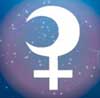 In addition to the North Node, the path of karmic advancement and the application of innate talents is shown by the White Moon, also called Selena or Lulu. This is a fictitious point that reflects the light karma accumulated by the native in a past life, or by their ancestors over several generations. The place where the guardian angel’s sign is located shows the area in which the native has accumulated the greatest number of good deeds. This is where the starry road to success and prosperity now shines, provided the higher qualities of the sign where the White Moon is located are developed and expressed.
Selena (White Moon) in Capricorn
The White Moon (Selena) in Capricorn means that in a previous life, her ward left behind idle worldly pleasures for the sake of serving loved ones in harsh conditions, making do with little in everyday life while generously giving the light of their soul to those around them.
This may have been the path of a monk, yogi, or physician who devoted themselves to prayer and healing practices. In a woman’s horoscope, there is a possibility of renouncing worldly joys for the sake of monastic service or a family act of devotion, such as adopting the children of deceased relatives or working as a nurse in a military hospital. Now Selena in Capricorn will not demand radical sacrifices, but it is necessary to develop Saturn’s higher qualities — discipline, punctuality, responsibility, and moderation in everything.
Read more...
Selena in the 10th House
The White Moon in the Tenth House indicates that the native has come with a great mission, which the zodiac sign of the Tenth sector and the aspects will help them understand. Most importantly, the Higher Powers have given them an enormous amount of energy, leadership qualities, and charisma so that, if they wish, they can become a leader of their generation, uniting people in movement toward a bright goal. Such opportunities come with enormous responsibility and imply a path of truth and justice, while any deviation toward selfish gain is punished by weakened protection.
The test of loyalty to the past merits of the family line takes place in accordance with the cycle of the guardian planet: every seven years. If the native has done good, helped others find their purpose, guided and inspired them with advice, while improving and developing themselves, then they are given even more practical opportunities to make their dreams come true, lead educational, social, and political movements, and contribute to art and literature.
Read more...
LILITH
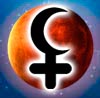 Lilith is considered a demon-temptress, but it is often not understood that at the highest level of consciousness development, she ceases to be a source of danger and, on the contrary, strengthens a person’s talents according to the sign and house in which she is placed.
For this reason, it is very important to bring one’s Lilith out of darkness and into the light. Then the courage for new exploration can manifest on a positive, creative level. This is a fictitious point in the horoscope, not a planet, but its power is often underestimated, while working through it is often considered impossible. However, the right actions and symbolism can work wonders.
Lilith shows the bottom, the darkest side of the person: the dark pit into which the native may fall if they give in to the temptation of lower vibrations and follow the path marked by Lilith. This should be kept in mind when reading a horoscope.
Lilith (Black Moon) in Pisces
Lilith in the sign of Pisces intensifies sensuality of a secret and suffering kind, which is not always perceived at the conscious level. Here it may choose both an illegal direction and an improper pattern of behavior. With this position of Lilith, the person is categorically required to renounce the role of seducer, tempter, corrupter of minors, and distributor of alcohol or drugs for the sake of profit, self-enrichment, or the satisfaction of animal instincts. They must also give up procuring, owning brothels, pimping, as well as espionage, sheltering criminal elements, or engaging in subversive activity. It is considered together with the positions of Neptune, Venus, Mercury, Jupiter, Chiron, and the Twelfth House of the horoscope.
Read more...
Lilith in the 12th House
In a previous life, the person enchanted and seduced everyone with their charms, tempted them, suppressed their will, used occult knowledge, and drew upon the forces of black magic. Those who did not yield to them or submit to their will were driven to a psychiatric hospital or to prison. This Karma is one of the heaviest, and the Twelfth House is the worst place for Lilith, because it is here that her fatality works at full power. Lilith, being the Demon’s closest assistant in sexual matters, participates in all bargains involving the sale of a human soul to Satan. If the person manages to avoid this bargain, the swamp of alcoholism, drug addiction, and other “pleasures” of the lower depths of life lies in wait for them. There is, of course, a possibility of avoiding this, but only through complete self-restraint, self-renunciation, and self-sacrifice. A fatal connection is indicated with a person whose planet forms a conjunction or some strong aspect with the native’s Lilith.
Read more...
Lilith Aspects:
PART OF FORTUNE

The Part of Fortune represents the path on which a person can achieve the greatest joy and fulfillment. It then becomes obvious that the Part of Fortune has much to do with how well a person meets and overcomes their negative karma, while at the same time creating and accepting the rewards of their positive karma.
The Part of Fortune, like the planet Jupiter, promises abundance. However, it encompasses a significantly larger part of a person’s existence than any specific planet. The Part of Fortune attunes the individual to the environment in which prosperity will be most natural for them, and determines for each person what their unique and special concept of success will be. It also shows the person’s strongest need, defining the keynote to which their entire being resonates.
Part of Fortune in Sagittarius
Here, in order to achieve success, the Part of Fortune requires from those under its influence energy, independence, and self-reliance. Trips to distant countries and contacts with foreigners may be successful, as may scientific and educational expeditions. Missionary strength and a close connection with representatives of the church and spiritual teachers are necessary. Nobility, generosity, goodwill, honesty, decency, and fairness form the foundation of life success. A will or inheritance is possible, as is income from public, religious, or missionary activity, public service, or church service.
Activity devoted to science, research work, pedagogy, philology, and jurisprudence may be successful. Success is also possible in medicine, especially as a veterinarian or surgeon. Dog breeding, horse breeding, fur farming, or fisheries bring good income. Public service or political activity is especially favorable. The person can also find themselves in the sports arena or as a publisher.
If afflicted, there is a tendency toward exaggeration and a desire to create only a favorable opinion of oneself. The person’s own tongue becomes their enemy, along with hasty, ill-considered decisions and rash actions.
Historical figures with the Part of Fortune in Sagittarius: George V, Crown Prince Rudolf, Cecil Rhodes, John Ned Backry, George Sand, Charles Baudelaire.
Additional description.
Part of Fortune in the Ninth House
The Part of Fortune in the Ninth House supports the individual’s spiritual growth and increases their intellectual potential. Income depends on the person’s intellectual level. If it is high, the main income can be expected from scientific work, intellectual activity, publishing or teaching, philosophy, and religious fields. Long-distance trips, business travel, extended educational journeys, and scientific expeditions also play a major role in life.
Activity connected with international organizations and enterprises may be successful. If the person is endowed with phenomenal abilities, such as the gift of foresight, prediction, or prophetic dreams, then these may bring the main and considerable income. This Part of Fortune supports the achievement of a high social level and a good material position, both on the worldly plane and in the spiritual hierarchy. Success is promised in all matters connected with higher education and pedagogical activity, mass cultural events, legal and public activity, and connections with foreign countries and foreigners.
Additional description.
VERTEX
 In the western hemisphere of every natal chart, a very important point can be found: the Vertex. It is compared to a handle on the gates of fate, which must be turned so that the doors open and allow the native into a new dimension. This is not just a point, but the peak of a sensitive axis in the horoscope, along which the electric current of karma flows. The Vertex is also called the electric Ascendant. It is activated unexpectedly during truly emotional periods of life.
The sign where this turning point of fate is located is at once an arena of passions, the scenery of the circumstances offered by life, and a clue to what exactly the native should develop within themselves. The aspects of the Vertex show talents and skills that are already present from the beginning, helping the native correspond to the scenario proposed by fate. These are magical tools that help the person pass through trials with honor and gain positive new experience in the houses where the Vertex is placed. More...
Strength Concentration (Astrodynes)
 This section examines the concentration of energy in the natal chart: which signs, planets, and houses contain the main strength. Everyone knows the Sun zodiac sign, but when the signs are viewed through the prism of the natal chart, it becomes clear how energy is distributed between the two strongest signs, and the Sun sign is not always dominant.
The signs give an idea of natural, instinctive motivations, such as likes and dislikes, attitudes, and reactions, and make it possible to judge whether a calling is present. The two strongest signs are shown in the table below. For more details about the distribution of strength in the natal chart, see the “Astrodynes” section: link to the Astrodynes chart.
| Sign | Strength |
|---|---|
| z Capricorn | 295 |
| f Cancer | 197 |
| ------ | ------ |
| TOTAL (12 Signs) | 978 |
Now the planets that concentrate the main energy in the chart can be identified. The planet with the greatest number of “astrodynes” is considered the strongest planet in the chart, since it reflects the most powerful energetic potential. Why are strong planets so important? The most powerful planets in the table indicate potential that can easily be transformed into abilities. This is where the person can succeed and achieve the best results.
| Planet | Strength |
|---|---|
| Y Jupiter | 71 |
| U Saturn | 69 |
| ------ | ------ |
| TOTAL (all Planets) | 634 |
By the same principle, the strongest houses emphasize the environment or sphere of life where it is easier for a person to practice and develop their skills.
| House | Strength |
|---|---|
| Tenth House | 228 |
| Fourth House | 166 |
| ------ | ------ |
| TOTAL (all Houses) | 978 |
CONTINUATION
Congratulations, the natal chart has been calculated. This is the basis, the foundation, the person’s inner cosmos. A person will return to it many times, each time discovering something new and unexplored.
All the links below lead to charts calculated using the data from the natal chart form.
Additional understanding of the chart can be gained through:
-
Fixed Stars in the natal chart. Some planets in the natal chart may behave in very unusual ways, and the cause may be the influence of a star hidden behind the planet or house cusp.
The next step is predictive astrology:
- Transit Calculation. This method makes it possible to calculate the transits of moving planets and overlay them on the natal chart. Transiting planets interact with the planets of the natal chart. As a result, an energetic connection arises, activating and awakening various events in a person’s inner and outer life.
Celebrities born in 1931:
Liked the article? Share with your friends.
Popular articles:
-
 Neptune – MC (Midheaven) Conjunction – The Power of Dreams
The Midheaven on the cusp of the Tenth House shows the chart owner in which sphere they can successfully and productively fulfill their calling. This is not only the... -
 Moon – MC (Midheaven) Square – The Winding Path of Intuition
A square to the Meridian of the Midheaven creates incredible tension in a person’s soul, especially when they are unable to fulfill what they have planned for a long... -
How to Fill Out and Calculate a Natal Chart: Step-by-Step Instructions
Filling Out the Natal Chart Form If you came to this page from search, these instructions refer to this natal chart. 1. Fill in the Name field. This field may be... -
 Method of Natal Chart (Horoscope) Analysis
The natal chart (horoscope) is a person’s astrological passport. Interpreting it can help uncover the causes of setbacks, adjust the development of one’s life... -
 Compatibility horoscope. Zodiac signs compatibility chart
In some Eastern countries, including India, there is an ancient tradition: before officially getting married, couples consult a local astrologer to draw up a...
Comments: